
A Conversation with Dr. Satabdi Basu
Comments Off on A Conversation with Dr. Satabdi BasuThis post features Dr. Satabdi Basu, a Senior Education Researcher at SRI International, an independent, nonprofit research institute.
Dr. Basu joined SRI International in 2016 after receiving her Ph.D. from Vanderbilt University in Computer Science (CS) with a specialization in AI for Education. At SRI, she leads projects in K-12 CS and AI education that give her the opportunity to work with school districts and focus on assessment and curriculum design and teacher professional development. She currently is working on several projects, including developing middle school CS teachers’ understanding of CS standards and formative assessment practices at Milwaukee Public Schools and bringing the SPICE (Science Projects Integrating Computing and Engineering) project to Metro Nashville Public Schools and Charlottesville City Public Schools. She is also working on an international project with school systems in Hong Kong that are focused on promoting computational thinking in primary grades.
Her research work also includes published articles summarized on our site:
- A Principled Approach to Designing a Computational Thinking Practices Assessment for Early Grades by Satabdi Basu, Daisy Rutstein, Yuning Xu, Linda Shear | ACM SIGCSE TS (2020)
- The Role of Evidence Centered Design and Participatory Design in a Playful Assessment for Computational Thinking About Data by Satabdi Basu, Betsy Disalvo, Daisy Rutstein, Yuning Xu, Jeremy Roschelle, Nathan Holbert | ACM SIGCSE TS (2020)
- What We Can Learn About Student Learning From Open-Ended Programming Projects in Middle School Computer Science by Shuchi Grover, Satabdi Basu, Patricia Schank | ACM SIGCSE TS (2018)
- Measuring Student Learning in Introductory Block-Based Programming: Examining Misconceptions of Loops, Variables, and Boolean Logic by Shuchi Grover, Satabdi Basu | ACM SIGCSE TS (2017)
- A Framework for Using Hypothesis-Driven Approaches to Support Data-Driven Learning Analytics in Measuring Computational Thinking in Block-Based Programming Environments by Shuchi Grover, Satabdi Basu, Marie Bienkowski, Michael Eagle, Nicholas Diana, John Stamper | ACM ToCE (2017)
Dr. Basu found the resources at CSEdResearch.org about 4 or 5 years ago when searching for survey instrumentation. She has used it ever since. She says, “I use the filters to find what I need, especially when writing literature reviews or designing instruments.” Internally at SRI, she endorses the resources on CSEdResearch.org and is always looking through the site to find new and updated information.
When asked why she uses CSEdResearch.org, she responded, “If it wasn’t there, I would be using Google Scholar to find papers, search for the instruments used, reach out to authors – that takes a lot of time. Using the site is easier and cuts down on the time of putting together instruments for projects or literature reviews for papers.”
In addition to the website, she also enjoys the tweets CSEdResearch.org provides that focus on brief informative guidance on instrument creation.
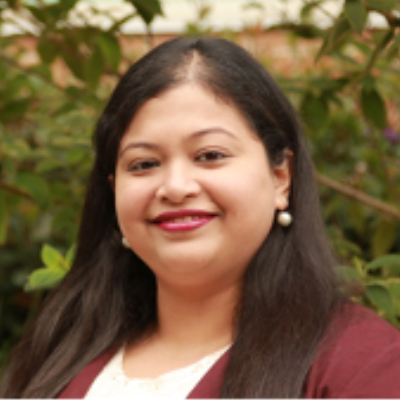 Dr. Satabdi Basu is a Senior CS Education Researcher at SRI International. She has published numerous articles on CS education research, particularly focused on computational thinking and K-12 students. She has presented at national and international conferences, and also been invited as a keynote speaker.
 Kristina Holsapple is an undergraduate student studying computer science at the University of Delaware. She works with Dr. Cory Bart.
  David Weintrop is an Assistant Professor in the Department of Teaching & Learning, Policy & Leadership in the College of Education with a joint appointment in the College of Information Studies at the University of Maryland. His research focuses on the design, implementation, and evaluation of accessible, engaging, and equitable computational learning experiences. His work lies at the intersection of design, computational science education, and the learning sciences. David has a Ph.D. in the Learning Sciences from Northwestern University and a B.S. in Computer Science from the University of Michigan.
 Bishakha Upadhyaya is a Senior at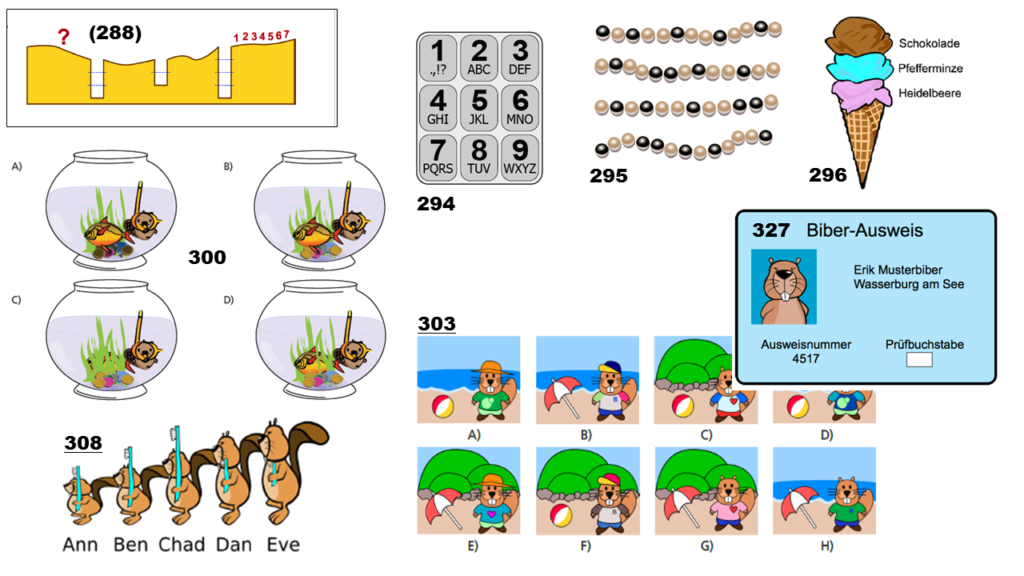
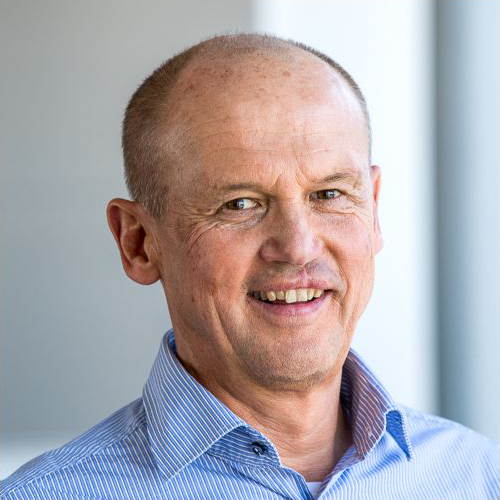 Peter Hubwieser, Technical University of Munich (Germany), taught math, physics and computer science at high schools until 2001. In 1995 he completed his doctoral studies in physics. In 2000 he acquired his postdoctoral teaching qualification (habilitation). In 2002 he was appointed to a professorship position at TUM. He has worked as visiting professor in Austria (Klagenfurt, Salzburg and Innsbruck), France (ENS in Paris and Rennes) and Michigan (MSU). His research activities focus on the empirical investigation of learning processes in computer science. His novel didactical approach triggered the introduction of computer science as a compulsory subject at Bavarian Gymnasiums in 2004.
  Miranda Parker is a Postdoctoral Scholar at the University of California, Irvine, working with Mark Warschauer. Her research is in computer science education, where she is interested in topics of assessment, achievement, and access. Dr. Parker received her B.S. in Computer Science from Harvey Mudd College and her Ph.D. in Human-Centered Computing from the Georgia Institute of Technology, advised by Mark Guzdial. She has previously interned with Code.org and worked on the development of the K-12 CS Framework. Miranda was a National Science Foundation Graduate Research Fellow and a Georgia Tech President’s Fellow. You can reach Miranda at